AI customer service for insurance
AI customer service for insurance is software that answers policyholder questions and takes the action behind them, then hands off to a claims handler when a person is needed.
Where insurance support breaks
Claims status, asked every day
Policyholders want to know where their claim stands. Each status check is a quick lookup that still reaches your team by phone or email, a dozen times a day.
Policy and coverage questions fill the queue
What's covered, what's the deductible, how do I add a driver. These are answerable from your own policy documents, but they consume an adjuster's time one call at a time.
First notice of loss is slow to file
The first call after an incident sets the tone. When FNOL intake is manual, errors creep in and the process slows at the moment a policyholder needs it to be fast.
The actions it takes, not just the answers
These ship in the insurance setup. Actions that change real systems can pause for a one-tap approval before they run.
Check claim status
Look up an open claim and return its current stage, assigned adjuster, and next step.
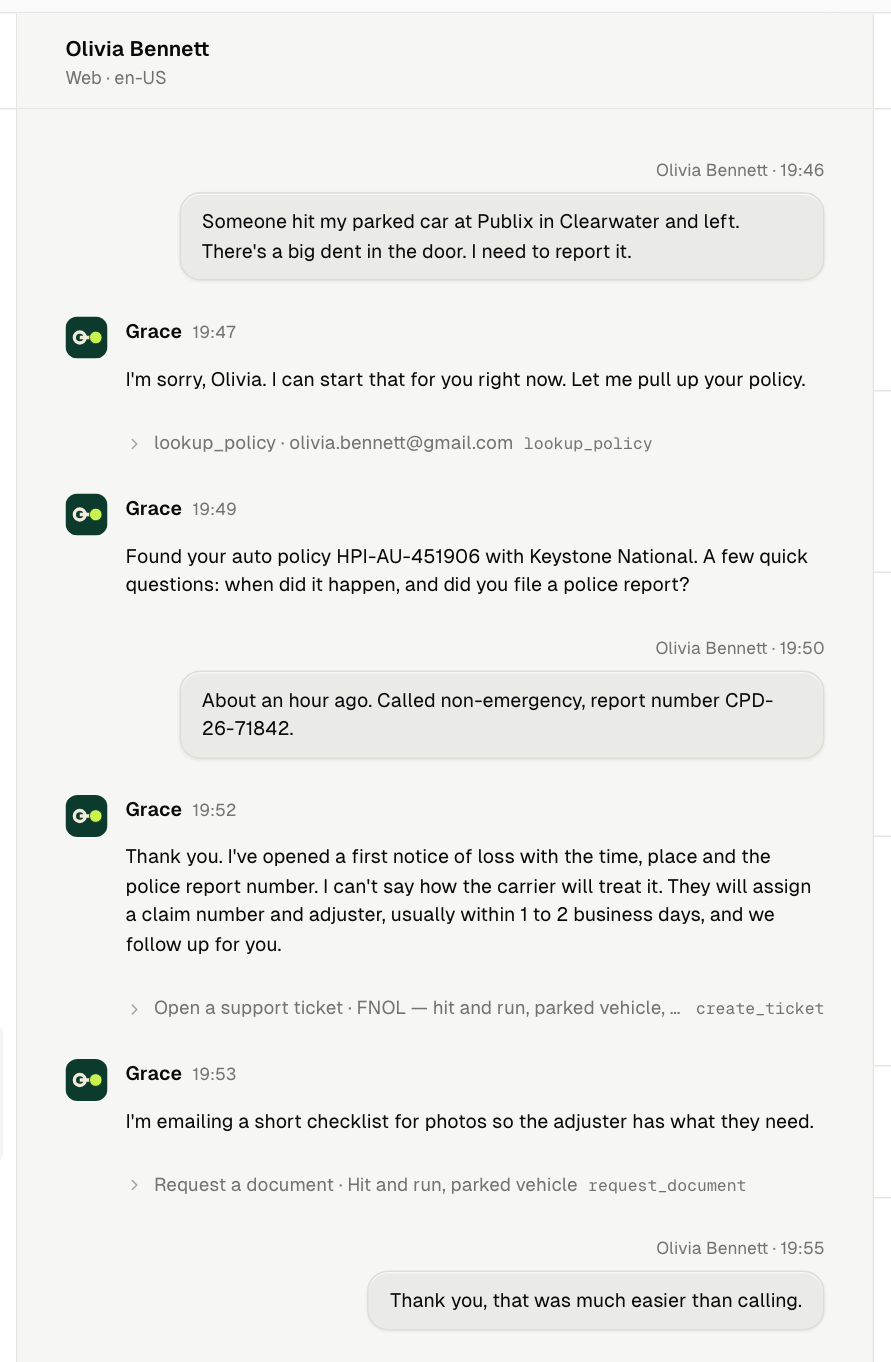
File a first notice of loss
Gather incident details, create a new claim record, and confirm receipt with a claim number.
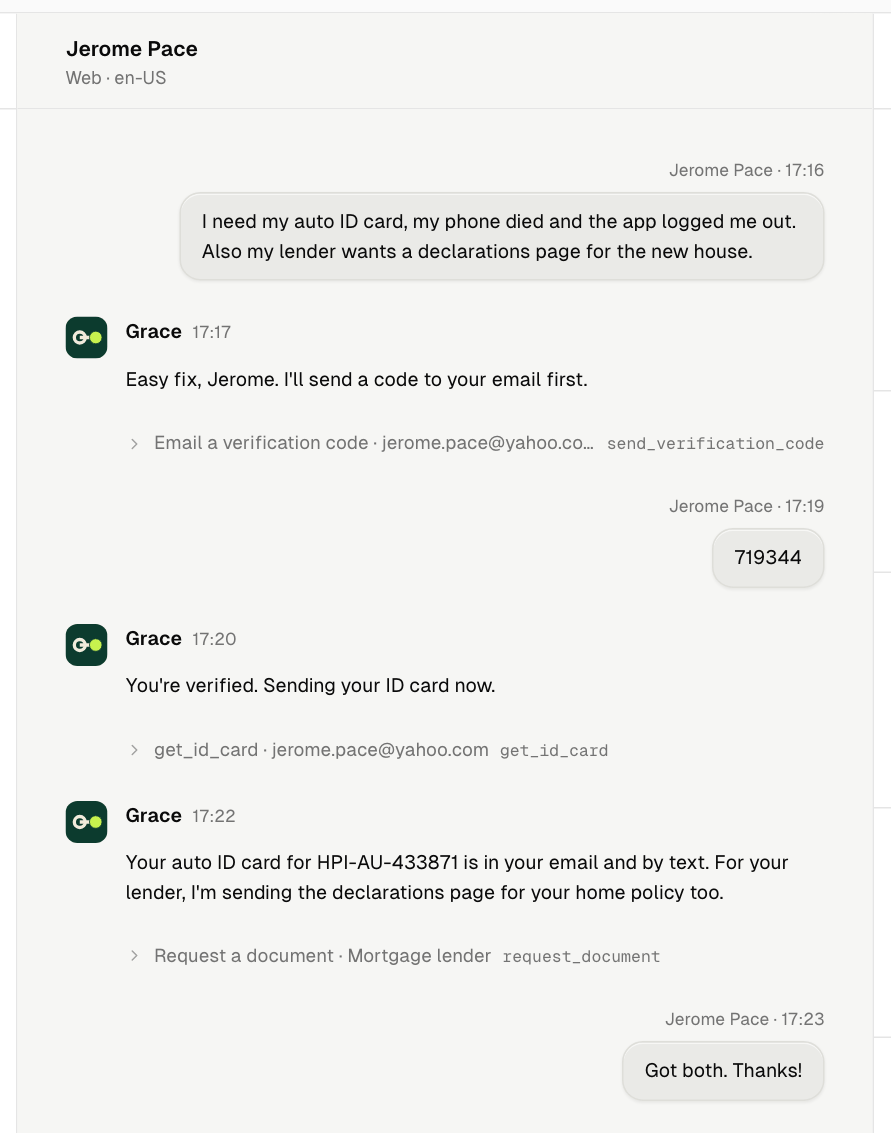
Collect and request documents
Tell policyholders which documents are needed and log what has been received.
Answer policy and coverage questions
Reply about coverage, deductibles, exclusions, and limits from your real policy documents.
Find a local agent or branch
Return the nearest agent or service center for the policyholder's location.
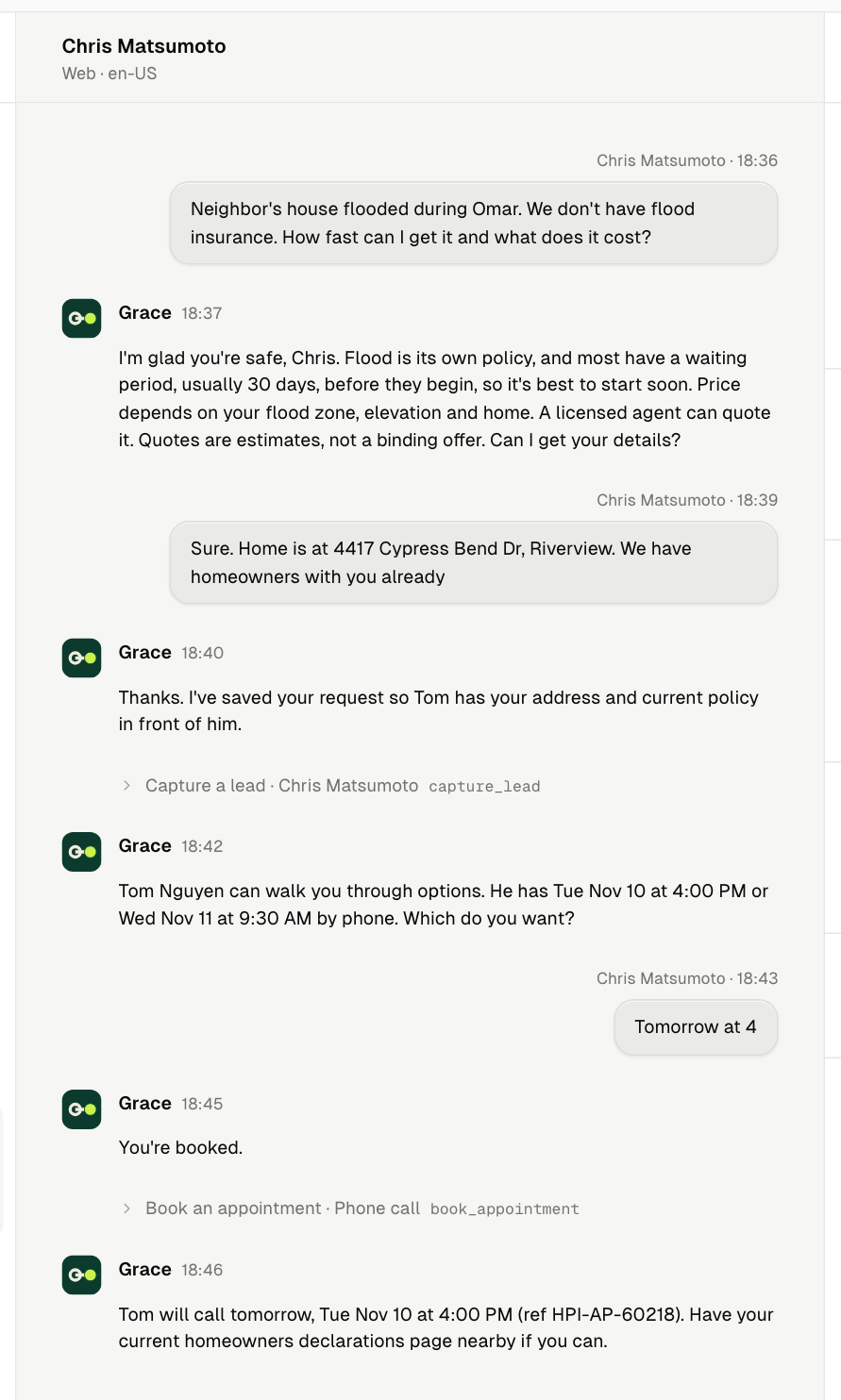
Capture a quote request
Save a prospective policyholder's details as a lead when they want a quote instead of filing a claim.
Escalate to a claims adjuster
Route anything that needs a person to the right handler with the full conversation.
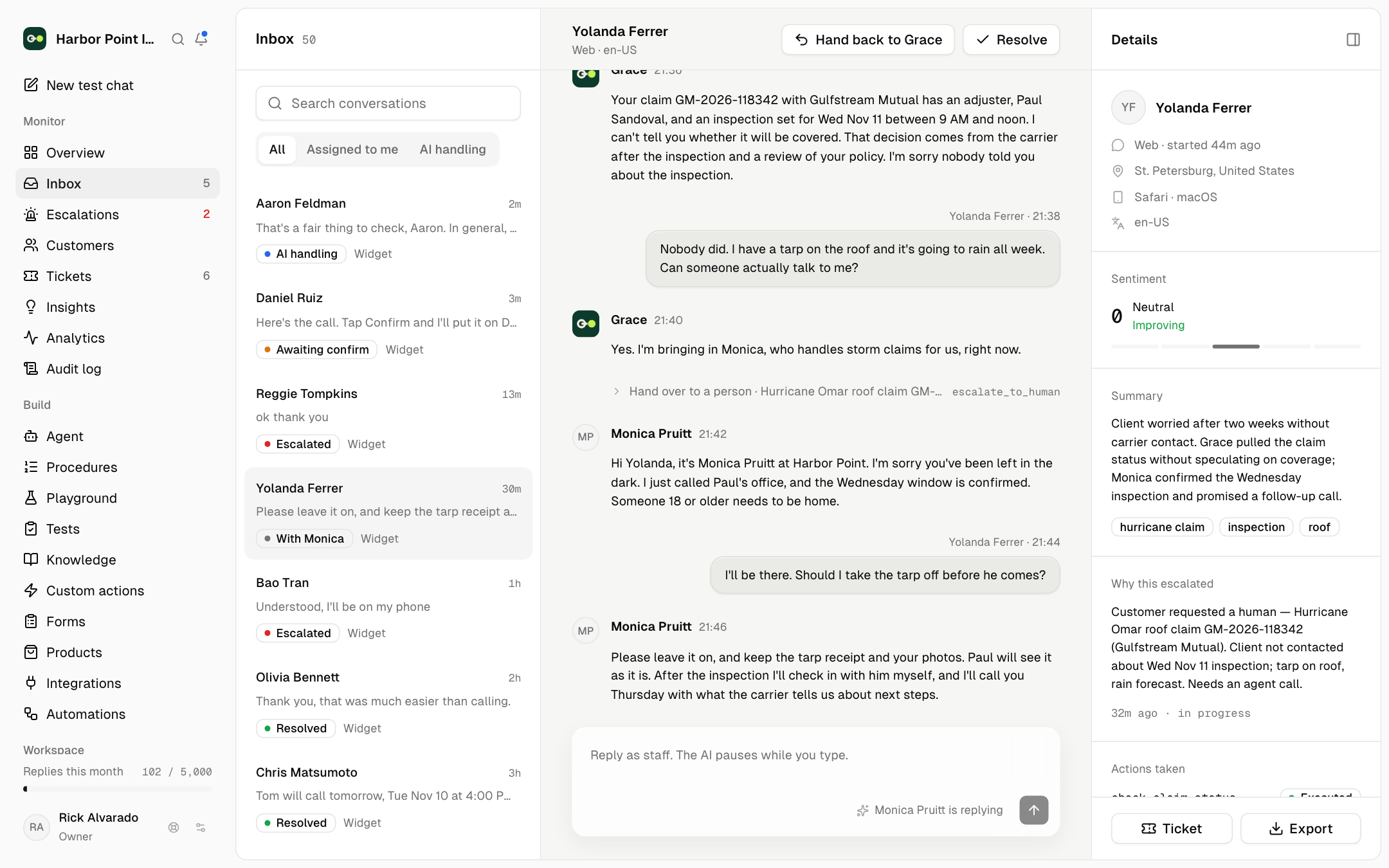
Grace at Harbor Point Insurance
Real conversation types from an insurance workspace. Every action is logged beside the reply it came from.
What that looks like in practice
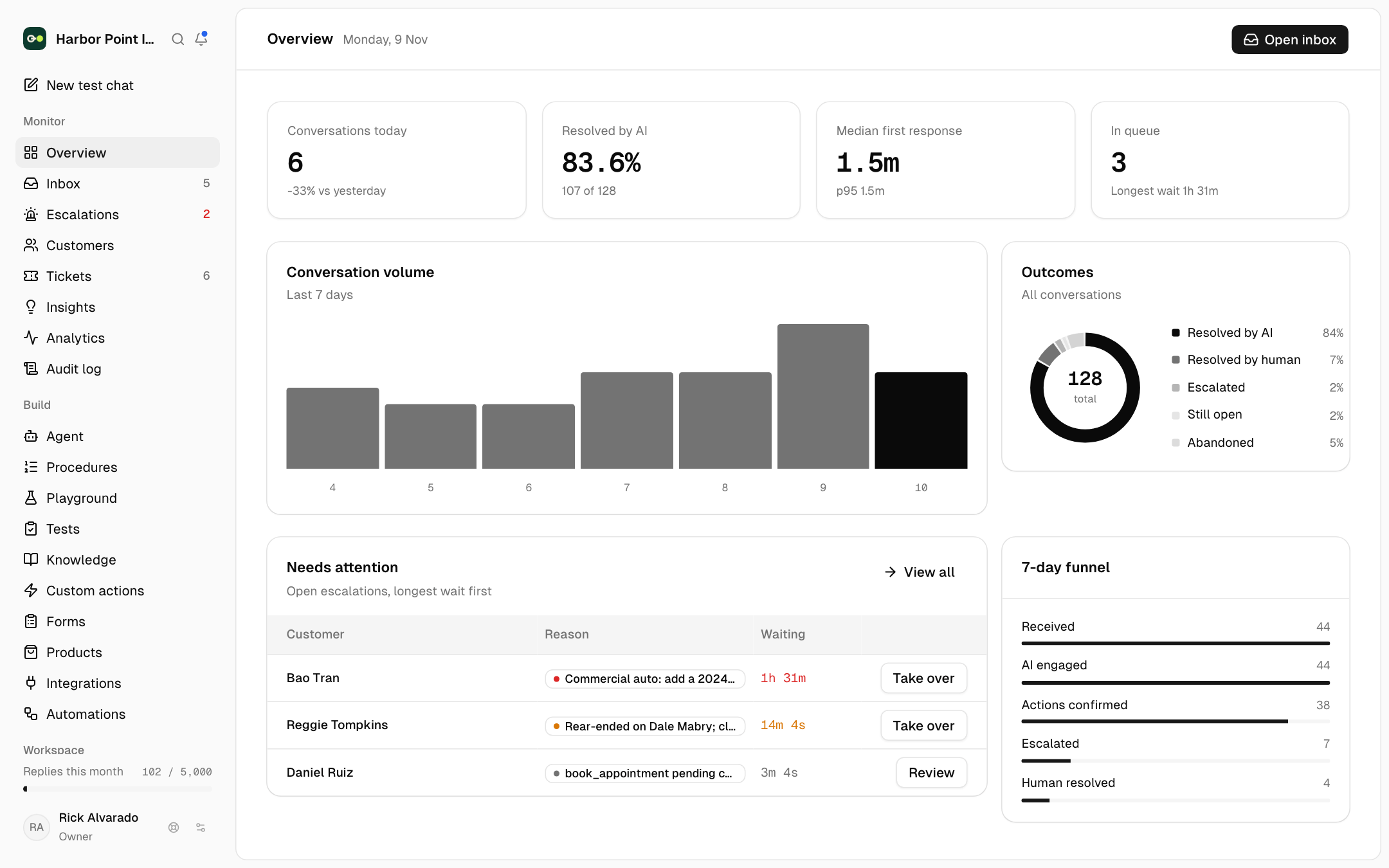
Bund AI answers day or night, so a policyholder who just had an incident gets confirmation and a claim number immediately rather than waiting for business hours. Claims with legal or regulatory complexity will still reach a person.
Insurance questions, answered
Can it actually file a first notice of loss?
Yes. The agent gathers incident details in plain language, creates the FNOL record in your system, and confirms receipt with a claim number. You decide which fields are required and which cases pause for adjuster review before the record commits.
Can it check claim status without a human in the loop?
Yes. It looks up an open claim by policy number or claim number and returns the current stage, assigned handler, and next step directly in the conversation, so policyholders stop calling just to get an update.
How does it answer policy and coverage questions accurately?
You connect your policy documents, coverage guides, and help content. The agent grounds every answer in your real material, cites the relevant section, and flags anything it could not answer so you can fill the gap.
What happens when a claim needs a claims adjuster?
The agent hands off with the full conversation, the incident details collected, and any documents already received, so the adjuster starts with complete context rather than a blank screen.
Can it handle people asking for a quote, not just existing policyholders?
Yes. When someone wants a quote rather than a claim, it captures their details as a lead for your sales team, separate from the claims and policy work it does for existing policyholders.
See another vertical
Put Bund AI on your insurance queue
See it resolve a real ticket on your own support flow. Live in under a day, with a 7-day free trial and plans from $49 a month.